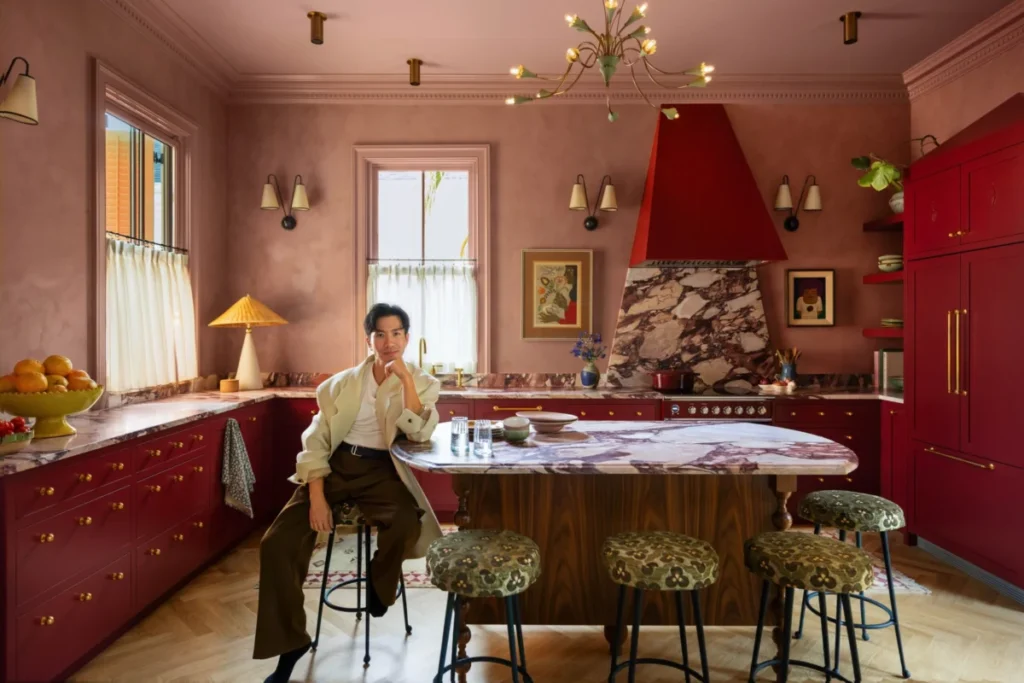

The intersection of personal identity and architectural expression has found a vibrant new landmark in New Orleans’ Faubourg Marigny district. Known to the design world simply as Dabito, the interior designer, author, and influencer has completed a residential project that serves as both a personal sanctuary and a bold statement on the evolution of historic preservation. The home, shared with his husband, stands as a testament to a career built on the transformative power of color, a journey that began in the cramped quarters of immigrant housing and has ascended to the heights of international design acclaim.

The Architectural Vision: Brand New Old
Building a new structure within the strict confines of a New Orleans historic district is a task fraught with regulatory hurdles and aesthetic expectations. The Faubourg Marigny, established in the early 19th century, is characterized by its dense collection of Creole cottages and shotgun houses. For Dabito and his architectural collaborator, Marcie Banks of Clementine Construction, the goal was to create a "brand new old" home—a structure that utilized modern construction techniques and layouts while paying homage to the craftsmanship and scale of its 19th-century neighbors.
The exterior of the home immediately distinguishes itself while remaining respectful of the local vernacular. Painted a bold marigold yellow with peach-pink shutters, the house embraces the "rainbow" aesthetic of its neighborhood. The Faubourg Marigny has long been recognized as a center for the city’s LGBTQ+ community, and Dabito’s choice of palette was intentional. He noted that the neighborhood’s queer identity is reflected in its architectural diversity and cheerfulness, and he wanted his home to contribute to that collective visual spirit.

Despite the boldness of the color scheme, the project received surprising support from local landmark commissions. While many historic districts are notorious for enforcing muted palettes, the New Orleans authorities encouraged the designer to "knock himself out," recognizing that the city’s history is one of vibrant expression rather than monochromatic rigidity.
A Chronology of Creative Evolution
Dabito’s path to becoming one of the most recognizable names in interior design is rooted in the immigrant experience. Born to Vietnamese parents who moved to the Los Angeles suburbs, his early years were marked by transience and limited space. The family lived in various rental apartments and motels, often sharing a single bedroom. It was within these confined spaces that Dabito first witnessed the psychological impact of design.

His father, a contractor, would bring home leftover paint from job sites to add decorative borders to their rental walls. This modest act of customization made the spaces feel "special" and served as the primary inspiration for Dabito’s future career. This background informed his 2023 book, Old Brand New, which advocates for making the most of any living situation through creativity and DIY spirit.
After studying printmaking at the University of California, Santa Cruz, Dabito launched his design blog, Old Brand New, in 2010. This was the dawn of the design-influencer era, and his focus on accessible DIY projects and daring color experiments quickly gained traction. By 2014, his personal and professional life converged in New Orleans, where he met his husband, an educator. Although the couple briefly relocated to Los Angeles—where Dabito transformed a 1950s bungalow into an Instagram sensation—the pull of the Crescent City remained strong. In 2022, they returned to New Orleans with the intention of building a "forever home" from the ground up.

Interior Design: A Masterclass in Maximalism
The interior of the New Orleans house is a curated explosion of texture and tone, moving away from the "sad beige" trends that have dominated modern minimalism. Each room is designed with a specific atmospheric goal, utilizing a mix of high-end custom finishes and accessible contemporary pieces.
The Kitchen and Dining Experience
The kitchen serves as the home’s emotional and aesthetic anchor. It features "borscht-red" cabinetry, a deep, earthy crimson that provides a sophisticated backdrop for the culinary space. The walls are finished in Venetian plaster, and the countertops are crafted from Calacatta Breccia marble, creating a tactile environment that feels both ancient and modern.

The dining room transitions into a cooler, more immersive palette of peacock blue. Here, the "brand new old" philosophy is visible in the furniture choices. Vintage Savonarola chairs, characterized by their X-frame design dating back to the Italian Renaissance, surround a modern burl-wood table. This juxtaposition of eras is a hallmark of Dabito’s style, suggesting a home that has been "collected" over decades rather than furnished in a single weekend.
Living and Private Quarters
The living room utilizes a more neutral "Creamy White" by Sherwin-Williams on the walls, but the space is far from quiet. It features a salon-style art arrangement that includes works by Anna Koeferl, Justina Blakeney, and Leroy Miranda. This gallery wall approach allows the designer to integrate personal history and contemporary art into the daily living space.

In the primary bedroom, the design takes a turn toward comfort and global influence. A Chinese Art Deco rug anchors the room, while a performance boucle bed from Castlery provides a modern touch. The use of zellige tile from Zia Tile in the primary bath—a traditional Moroccan terracotta tile known for its irregular, handmade finish—further emphasizes the importance of texture in Dabito’s work.
Commercial Impact and Design Influence
Dabito’s influence extends beyond individual residential projects into the broader commercial market. His ability to blend high-design concepts with DIY accessibility has made him a sought-after collaborator for major home brands. His partnerships with companies like Mitzi (lighting), Brooklinen (bedding), and York Wallcoverings (wallpaper) have allowed his aesthetic to reach a mainstream audience.

Supporting data from the home decor industry suggests a significant shift toward the "maximalist" style championed by Dabito. According to market research, the global home decor market is expected to reach over $800 billion by 2028, with a growing segment of consumers moving away from mass-produced minimalism in favor of "dopamine decor"—spaces designed to elicit joy through color and personal expression. Dabito’s work sits at the forefront of this movement, proving that bold choices can have both aesthetic and commercial longevity.
Broader Implications for Urban Design
The completion of this project highlights a significant trend in urban design: the revitalization of historic districts through sensitive new construction. Rather than simply replicating the past, designers like Dabito and architects like Marcie Banks are showing that new buildings can enhance the character of a neighborhood by interpreting historic themes through a contemporary lens.

Furthermore, the project underscores the importance of "queer spaces" in urban environments. By explicitly linking his design choices to the identity of the Faubourg Marigny, Dabito has created a home that is not just a private residence but a contribution to the cultural fabric of the city. It serves as a reminder that architecture is never neutral; it is always a reflection of the people who inhabit it and the history they carry with them.
Conclusion: The "Forever" Home
As Dabito and his husband settle into their new residence, the house stands as a milestone in a career that has spanned two decades and multiple cities. While the designer jokingly suggests that the home is "forever—until the next one," the level of detail and the ground-up nature of the construction suggest a deeper level of permanence.

The project successfully bridges the gap between the motels of his childhood and the high-design mansions of Architectural Digest. It is a house built on the foundation of "gumption," a single-name identity, and an unwavering belief that a little bit of leftover paint—or a lot of borscht-red cabinetry—can make any space special. In the heart of New Orleans, Dabito has not just built a house; he has painted a new chapter in the city’s architectural history.