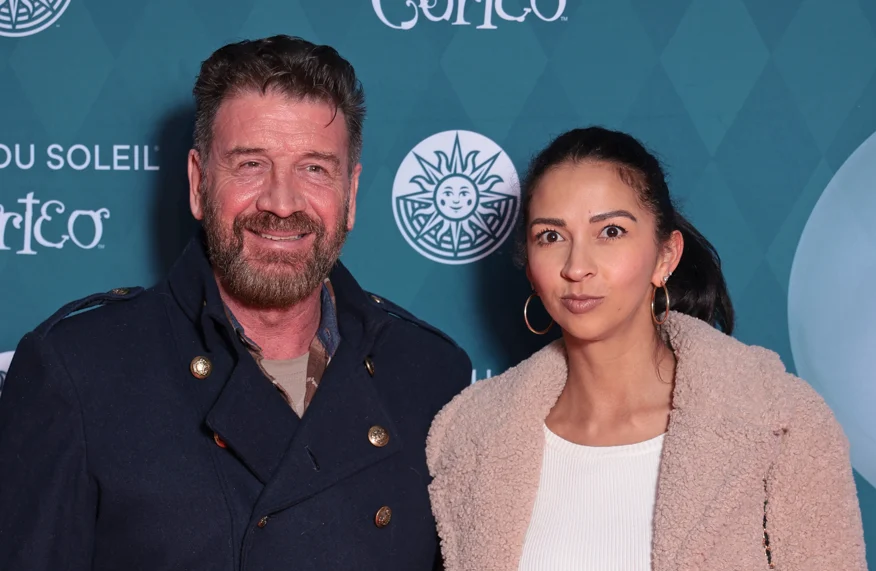

Katie Knowles, the wife of television presenter Nick Knowles, has bravely come forward to disclose her harrowing experience of being raped by her father during her childhood, a revelation that subsequently exposed her to a torrent of cruel online comments from internet trolls. Her decision to share this deeply personal trauma was spurred by recent investigative reporting on a global "online rape academy," where men reportedly exchanged tactics for sexually assaulting women, often within existing relationships. Knowles has not only condemned the pervasive misogyny highlighted by this exposé but has also directly confronted those who sought to discredit her story and blame the victim.
The Initial Revelation and Its Catalyst
On a recent Saturday, Katie Knowles shared her story publicly for the first time in an emotional video, stating, "I have never spoken about this publicly, other than to friends, family and even then not everyone." She detailed years of abuse, explaining, "I was raped by my dad for years, years and years." This profound disclosure was not made in isolation but was a direct response to her deep concern after reading a CNN investigation into the disturbing phenomenon of online groups dedicated to sharing strategies for sexual assault. The exposé illuminated a "terrifying world" where men actively conspired to drug and assault women, normalizing predatory behavior.
Knowles articulated how this news profoundly affected her, causing her mood to "dip" and reinforcing a pervasive sense of vulnerability. She described her constant vigilance as a woman, recalling instances like gripping her keys tightly while walking from the gym, even when dressed in athletic wear, fearing judgment or aggression. "I’m not asking for attention or rape," she asserted, highlighting the unfair burden placed on women to constantly defend their appearance and presence. She underscored that such incidents are not confined to dark alleys or strangers but frequently occur "in homes. Inside families. In places that are supposed to be safe." Her powerful message aimed to dismantle the myth that danger exclusively lurks outside, pointing instead to the insidious nature of abuse within trusted environments.
Confronting the Online Backlash: "Idiot Watch"
Despite receiving hundreds of messages of support and solidarity from empathetic readers, Katie Knowles was also subjected to what she termed "idiotic" and victim-blaming comments. Rather than retreating, she chose to publicly call out these trolls, using her platform to expose their insensitivity and ignorance. She shared screenshots of particularly egregious comments on her Instagram Story, branding them "Idiot watch part 1" and "Part two."
One user questioned her timing, writing, "Shouldn’t you have reported it to the police at the time… why wait until the has passed. A dead man can’t defend himself. So sad." Knowles swiftly and forcefully rebutted this, responding, "Because I was a child – what a backwards f**king idioic comment." Another troll echoed the sentiment, stating, "Hard to defend himself as he’s dead." These comments exemplify a common pattern of victim-blaming, where survivors, particularly those of childhood abuse, are interrogated about their actions rather than the perpetrators. Her direct and unapologetic response highlighted the profound lack of understanding and empathy that often accompanies discussions of sexual abuse, especially when the perpetrator is deceased.
The Complexities of Childhood Sexual Abuse and Delayed Reporting
Knowles’s experience sheds light on the well-documented complexities surrounding child sexual abuse and the reasons for delayed reporting. For many child victims, reporting abuse at the time it occurs is often impossible due to a confluence of factors. Children may not fully comprehend what is happening to them, or they may be manipulated, threatened, or coerced into silence by the abuser, who is frequently a trusted family member or authority figure. The power imbalance between an adult perpetrator and a child victim is immense, creating an environment of fear, shame, and confusion.
According to various studies by organizations like the National Sexual Violence Resource Center (NSVRC) and Rape, Abuse & Incest National Network (RAINN), a significant percentage of child sexual abuse goes unreported for years, sometimes decades. Reasons include:

- Fear of Retaliation: Children often fear what the abuser or other family members might do if the secret is revealed.
- Shame and Guilt: Victims may internalize the abuse, believing it was their fault or that they are somehow "dirty" or responsible.
- Lack of Understanding: Young children may not have the vocabulary or conceptual framework to articulate what is happening to them, especially if the abuse is normalized within their environment.
- Loyalty and Protection: Children may feel a misguided sense of loyalty to the abuser, particularly if they are a parent or close relative, fearing they would be breaking up the family.
- Disbelief: Victims fear they won’t be believed, or that their story will cause too much disruption.
- Trauma Response: The psychological impact of trauma can manifest as dissociation, memory suppression, or a general inability to process and articulate the events until much later in life, often triggered by a specific event or therapy.
The argument that a deceased perpetrator cannot defend themselves, while legally relevant in criminal proceedings, entirely overlooks the survivor’s journey towards healing and justice. For many survivors, speaking out, even years later, is a crucial step in reclaiming their narrative, processing trauma, and seeking validation, irrespective of the legal consequences for the abuser. It also serves a vital public health function by raising awareness and potentially preventing future abuse.
Broader Implications: The "Terrifying World" for Women
Katie Knowles extended her discussion beyond her personal trauma to address the broader climate of fear and harassment that many women experience daily. She highlighted the disparity in safety, noting, "It’s not all men, but it is. It is men. It is men who commit the majority of domestic violence and sexual abuse." She stressed that in cases of sexual abuse, the perpetrator is "almost always someone that you know or a family member or a partner, or an ex-partner." This statement challenges the popular misconception that sexual assault is primarily committed by strangers in dark alleys, emphasizing the more prevalent reality of abuse by acquaintances and intimates.
She also recounted other incidents of harassment she experienced as a younger woman, illustrating the constant vigilance required. She detailed an instance of an older man finding her on Facebook and asking her out after seeing her in her school uniform daily on the train, and similar experiences with other men. "These are not isolated incidents, and I could list 100 more. But so could every other woman I’ve spoken to about it," she asserted. These anecdotes underscore the pervasive nature of unwanted attention, verbal harassment, and intimidation that contribute to the "terrifying world" she described.
The CNN investigation into "online rape academies" serves as a stark reminder of the organized and deliberate efforts by some individuals to perpetuate violence against women. These online communities facilitate the sharing of tactics for drugging, manipulating, and assaulting women, often providing a disturbing sense of camaraderie and validation for perpetrators. The existence of such groups highlights a deeply disturbing trend of digital misogyny evolving into real-world harm, creating an even more hostile environment for women and girls online and offline.
Public Figures and the Fight Against Victim-Blaming
Katie Knowles, known publicly as the wife of Nick Knowles—with whom she married last summer at Braxted Park, Essex, after an initial impression of him as "quite extroverted and a complete chatterbox" contrasting with her "shy and quiet" nature—has leveraged her public profile to spark an important conversation. Her courage in sharing her story, and her direct confrontation of victim-blaming trolls, serves as a powerful message to other survivors and to society at large.
The public outcry and support she received demonstrate a growing awareness and intolerance for online harassment and victim-blaming. However, the persistence of "idiotic" comments reveals that much work remains to be done in educating the public about the dynamics of sexual abuse, the trauma it inflicts, and the complex journey of survivors.
The implications of Knowles’s actions extend beyond her personal narrative. By speaking out, she contributes to the ongoing destigmatization of sexual abuse and empowers other survivors to seek help and share their stories if they choose. Her challenge to online trolls also highlights the urgent need for social media platforms to implement more robust mechanisms for identifying and removing harmful content and for fostering safer online environments.
In a world where digital spaces can be both a source of support and a breeding ground for hatred, figures like Katie Knowles play a crucial role in advocating for empathy, understanding, and accountability. Her experience serves as a poignant reminder that the fight against sexual violence and misogyny requires not only addressing perpetrators but also dismantling the societal narratives that silence victims and protect abusers.
If you’ve been the victim of sexual assault, you can access help and resources via www.rapecrisis.org.uk or calling the national telephone helpline on 0808 802 9999.