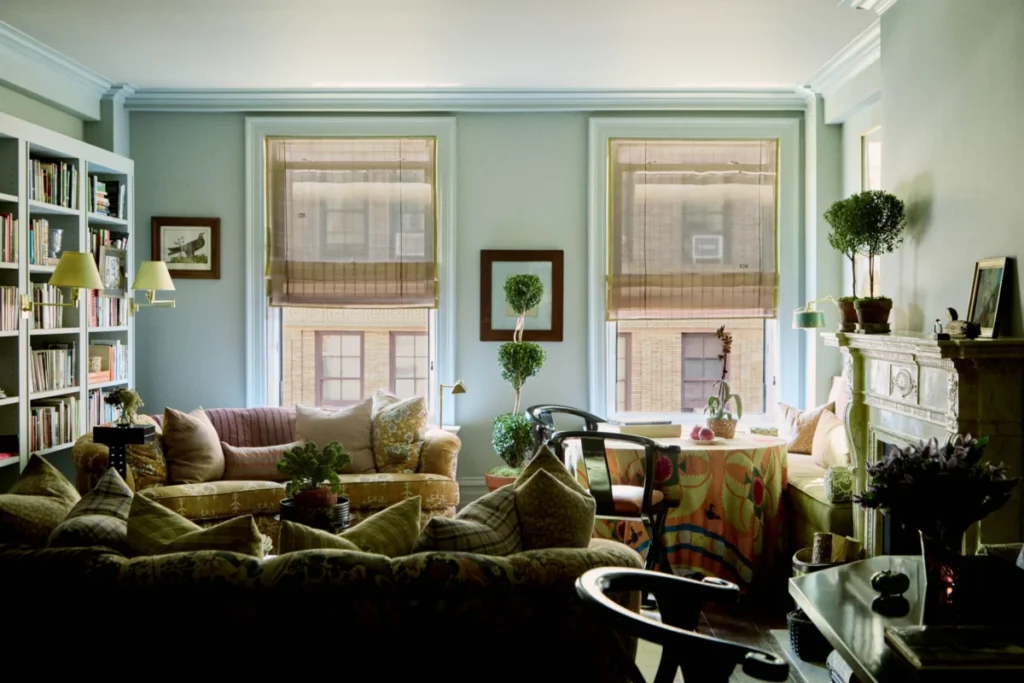

The intersection of personal history and professional expertise often yields the most compelling results in the world of high-end interior design. This synergy is currently on full display in a recently completed renovation of a pre-war apartment on New York City’s Upper East Side. Interior designer Noah Ruttenberg, principal of NJCR Studio, was commissioned by his lifelong friend Eugenia Zobel de Ayala and her husband to transform their residence into a space that balances historic architectural integrity with a deeply personal, layered aesthetic. The project, which successfully navigated the complexities of both structural renovation and intensive interior curation, serves as a testament to the power of a well-established rapport between client and designer.

The Architectural Foundation and Project Scope
The residence is located within a building designed by George F. Pelham, a prolific architect of the early 20th century whose work defined much of the residential landscape of Manhattan’s most prestigious neighborhoods. Pelham, known for his ability to blend Renaissance Revival and Neo-Gothic elements, provided the apartment with what Ruttenberg describes as "good bones"—high ceilings, generous proportions, and a sense of permanence. However, like many apartments of its era, the layout was characterized by a fragmented floor plan that did not align with contemporary standards of circulation and lifestyle.
The primary objective of the renovation was to maintain the dignity of the historic architecture while modernizing the flow. Ruttenberg and his team at NJCR Studio focused on a "major rethink" of the interior logic. This involved targeted structural adjustments intended to streamline movement through the home without sacrificing the charm of a multi-room layout. In an era where open-concept living has become a default setting, Ruttenberg opted for a more traditional approach, choosing to celebrate the distinct identity of each room while improving the transitions between them.

Chronology of the Renovation: From Vision to Execution
The project began with a comprehensive analysis of the existing floor plan. The original layout required residents and guests to traverse multiple rooms to reach the kitchen, a common design quirk of the early 1900s when service areas were strictly segregated.
- Phase One: Structural Reorganization (Month 1-4): The design team introduced a new central hallway. This structural intervention served as the apartment’s spine, allowing for efficient access to the kitchen and secondary bedrooms without disturbing the privacy of the primary living areas. The foyer, main living area, and primary suite remained largely in their original positions, but their relationship to the rest of the home was fundamentally altered.
- Phase Two: Mood and Material Development (Month 5-8): With the layout finalized, Ruttenberg and Zobel de Ayala turned their attention to the "story" of each room. This phase saw the selection of a diverse palette—ranging from cozy olive hues in the den to vibrant floral patterns in the powder room. It was during this period that the project’s most significant creative byproduct emerged: the birth of Tela, Zobel de Ayala’s textile line.
- Phase Three: Curation and Installation (Month 9-12): The final stage involved the integration of custom furnishings, antiques, and a specialized art collection. This included the installation of vintage James Mont chairs, Pierre Frey linens, and a series of custom-designed banquettes.
The Design Philosophy: Layered Maximalism and Cultural Heritage
The Upper East Side project is defined by its rejection of sterile minimalism. Instead, Ruttenberg embraced a "lived-in and layered" philosophy. The living room, which the designer considers the heart of the home, is a sophisticated exercise in pattern mixing. Vintage sofas were reupholstered in disparate prints, complemented by a collection of pillows featuring plaid, gingham, stripes, and suzani textiles.

A significant element of the design is the integration of Zobel de Ayala’s Filipino heritage. The use of handwoven textiles from the Philippines provides a sense of "soul and patina" that is often missing from modern renovations. This cultural infusion is most evident in the framed antique Filipino blouses that hang above the main dining banquette, serving as both a personal heirloom and a focal point of the room’s aesthetic.
The designer’s approach to furniture was equally eclectic. By mixing mid-20th-century pieces, such as the James Mont lacquer chairs, with contemporary custom designs, Ruttenberg created a space that feels as though it has been assembled over decades rather than months. A notable custom piece is a living room table designed without one of its four corners, a strategic choice made to facilitate smoother circulation in a high-traffic area.

Room-by-Room Breakdown: Specialized Solutions
Each space within the apartment was treated as a unique narrative environment, utilizing high-end materials and innovative spatial solutions.
The Kitchen and Informal Dining
In the compact kitchen, storage was a primary concern. Ruttenberg utilized push-to-open cabinetry to maintain a clean visual line. These cabinets were uniquely adorned with Bordallo Pinheiro fish plates, adding a playful, tactile element to the functional space. A cozy dining nook was created using a custom banquette and an antique chair, reflecting the client’s desire for multiple "perches" throughout the home.

The Den and Home Office
One of the three bedrooms was converted into a multifunctional den. This space serves as both a media room and a private office for the husband. To manage the technical requirements of the room, Ruttenberg designed a custom desk that conceals the HVAC unit, inspired by a vintage Hermès wastebasket. The room also features built-in shelving and a niche for an Anthropologie sleeper sofa, allowing it to function as a guest room when necessary.
The Primary and Guest Suites
The guest bedroom serves as a tribute to Philippine craftsmanship, featuring grasscloth sourced by the client’s mother. The primary bedroom continues the theme of refined comfort, utilizing an 1980s brass-and-glass table as a vanity and a vintage Finnish mirror. The integration of Zobel de Ayala’s "Tela" fabrics—particularly the sheer piña fabric—adds a translucent, delicate layer to the windows and upholstery.

Supporting Data: The High-End Renovation Market
The renovation of this Upper East Side apartment occurs within a broader context of a surging luxury renovation market in New York City. Industry data from 2023-2024 indicates that homeowners in historic Manhattan neighborhoods are increasingly prioritizing "bespoke heritage" over modern trends.
- Market Trends: According to recent real estate design reports, there has been a 15% increase in the demand for "pre-war modernization" projects that retain original architectural details while upgrading infrastructure.
- Materiality: The use of artisanal and handwoven textiles—like those from Zobel de Ayala’s Tela line—reflects a global shift toward sustainable, culturally significant materials in luxury interiors.
- Architectural Value: Properties in buildings designed by renowned architects like George F. Pelham typically command a 10-20% premium over non-pedigreed buildings of the same era, making thoughtful renovations a sound financial investment.
Statements and Reactions
Reflecting on the collaboration, Noah Ruttenberg emphasized the importance of the pre-existing bond between designer and client. "It’s such an amazing opportunity to work with someone you know deeply and with whom you’ve gone through various stages of life," Ruttenberg stated. He noted that the goal was to create a home that "looks and feels like them while inspiring joy and happiness."

While the client, Eugenia Zobel de Ayala, has transitioned from a client to a collaborator in the textile space, her influence on the project was foundational. The design process reportedly provided the necessary impetus for her to launch Tela, filling a gap she perceived in the market for textiles with an "inherent sense of soul."
Broader Impact and Implications for the Interior Design Industry
The success of the Ruttenberg-Zobel de Ayala collaboration highlights several emerging trends in the interior design industry. First, it underscores the move away from "open-plan" living toward a "room-based" philosophy that allows for greater decorative expression and functional privacy. This is particularly relevant in the post-pandemic era, where homes must serve as offices, sanctuaries, and social hubs simultaneously.

Second, the project illustrates the growing trend of "entrepreneurial interiors," where the design of a private residence serves as the incubator for a new commercial brand. By using the apartment as a testing ground for Tela textiles, Zobel de Ayala was able to refine her product in a real-world setting, demonstrating a seamless integration of lifestyle and business.
Finally, the renovation serves as a case study in how to respect architectural history without being beholden to it. By making bold structural changes and introducing a global, eclectic palette, Ruttenberg has proven that early-20th-century Manhattan apartments can be adapted for 21st-century living without losing their historical resonance. The project stands as a sophisticated example of how friendship, when paired with professional rigor, can produce a home that is both a gallery of personal history and a functional modern residence.