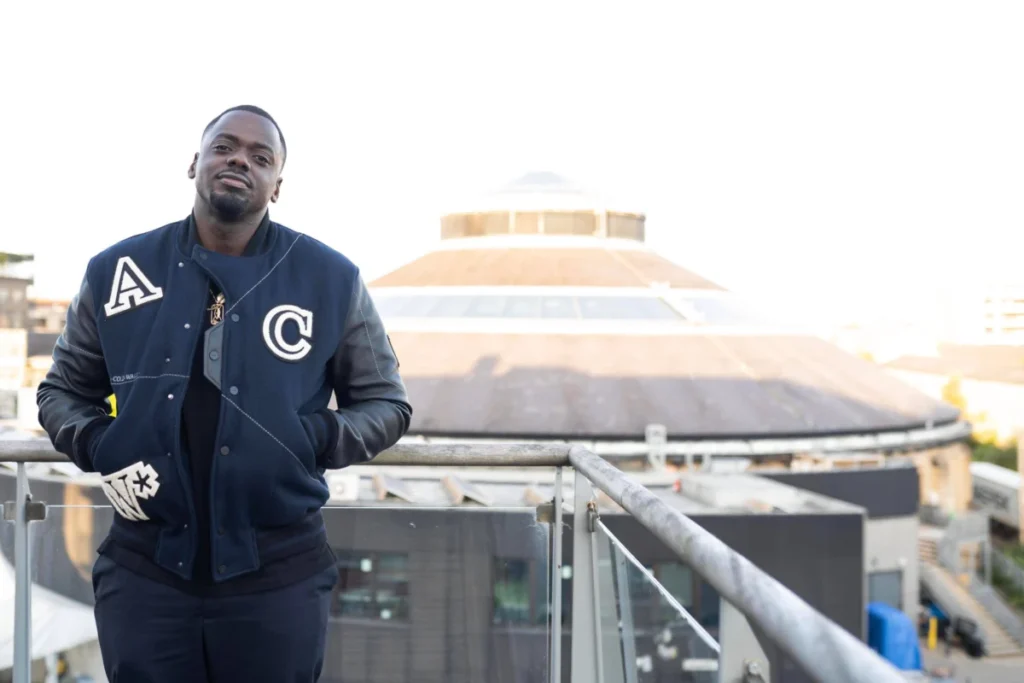

Oscar-winning actor, writer, director, and producer Daniel Kaluuya, aged 37, recently offered profound insights into the driving forces behind his illustrious career, attributing his success to an innate love for his craft and a "blissfully stubborn" resolve cultivated in his formative years. Speaking during the "Making Space: Exploring Creativity, Society And The Roundhouse" podcast, Kaluuya also articulated his vision for nurturing emerging talent through his youth theatre company, Centre 59, a collaborative initiative with north London’s esteemed music and arts venue, Roundhouse, launched three years prior. His reflections extended to the broader challenges confronting the arts today, particularly concerning institutional valuation and the transformative impact of artificial intelligence on human creativity.
A Career Forged in Passion and Persistence
Kaluuya’s journey into the global spotlight began in the early 2000s, emerging from the vibrant UK youth drama scene. Born in London to Ugandan parents, Kaluuya’s early life in Camden provided a rich tapestry of cultural influences that would later inform his artistic sensibilities. His breakout role came in the acclaimed Channel 4 teenage drama series Skins, where he not only portrayed the character Posh Kenneth but also contributed to the show’s authentic voice as a writer for two episodes. This early immersion in both performance and creation signaled a multifaceted talent destined for greater things.
Following Skins, Kaluuya honed his skills on the British stage, earning critical acclaim for his powerful performances. Notably, his role in Roy Williams’ play Sucker Punch at the Royal Court Theatre in 2010 garnered him an Evening Standard Award nomination for Outstanding Newcomer, marking him as a significant presence in contemporary British theatre. This foundation of stage work provided a rigorous training ground, developing the intensity and nuance that would become hallmarks of his screen performances.
The transition to Hollywood was swift and impactful. Kaluuya’s distinctive presence and compelling performances quickly captured international attention. He appeared in critically praised films such as Denis Villeneuve’s crime thriller Sicario (2015), where he held his own alongside seasoned actors. However, it was his starring role as Chris Washington in Jordan Peele’s groundbreaking horror film Get Out (2017) that truly propelled him to global stardom. The film was a cultural phenomenon, earning Kaluuya an Academy Award nomination for Best Actor and solidifying his reputation as a leading man capable of delivering complex, emotionally charged performances.

His subsequent filmography reads like a testament to his versatility and discerning choice of projects. He appeared as W’Kabi in Marvel’s Black Panther (2018), contributing to another cultural milestone, and delivered a memorable performance in Steve McQueen’s Widows (2018). His role in Melina Matsoukas’s Queen & Slim (2019) further showcased his dramatic range, tackling themes of race and injustice with raw power. The pinnacle of his acting career to date arrived with his portrayal of Fred Hampton in Judas and the Black Messiah (2021), a performance that earned him the Academy Award for Best Supporting Actor, cementing his status as one of his generation’s most formidable talents. More recently, he reunited with Jordan Peele for the ambitious sci-fi horror Nope (2022), continuing his collaboration with visionary directors.
Beyond acting, Kaluuya has increasingly focused on behind-the-camera endeavors. He co-founded 59% Productions, a company dedicated to telling authentic stories, and has been actively involved in writing, directing, and producing. His recent co-writing and producing credit on the dystopian drama The Kitchen (2024), which premiered on Netflix, signals a clear commitment to shaping narratives from conception to screen, further demonstrating his evolution from performer to a comprehensive creative force.
The Power of Intuition and Parental Support
During the podcast, Kaluuya reflected on the unwavering conviction that guided him from a young age. "I just love what I do and I want to keep doing that," he asserted. "I don’t think I had the temperament to do a job I didn’t love if I’m being honest, for a living, at that age. I was just kind of blissfully stubborn. I really love this. I really want to do this." This "blissfully stubborn" attitude, he explained, was crucial in navigating the often-uncertain path of an aspiring artist.
He emphasized the transformative impact of early exposure to drama clubs and youth classes, not just for skill development but for fostering self-discovery. "The most valuable thing I learned from youth classes and drama clubs was tuning into my inner voice, listening to my intuition, and knowing what to write or create," Kaluuya revealed. This insight underscores the profound psychological and developmental benefits of arts education, which extends far beyond performance techniques, nurturing critical thinking and self-awareness.
Crucially, Kaluuya credited his mother for providing the ideal environment for his creativity to flourish. "My mum didn’t push. She just gave me space and believed in me. That freedom was more powerful than anything else," he shared. This testimonial highlights the often-underestimated role of supportive parenting, particularly in allowing children the autonomy to explore their passions without undue pressure, a stark contrast to approaches that might prioritize conventional career paths over artistic pursuits. This freedom, Kaluuya suggests, was not merely an absence of constraint but an active affirmation of his potential, empowering him to trust his instincts and pursue his unique artistic vision.

Centre 59: Cultivating the Next Generation
Kaluuya’s personal journey, deeply rooted in youth theatre, directly informed his decision to establish Centre 59 in partnership with the Roundhouse. This initiative is more than just a drama club; it is a strategic effort to replicate the supportive and empowering environment that allowed him to thrive. "It’s about empowering young people, letting them show us what they can do and then finish," he explained, emphasizing the importance of fostering independence and agency among participants. The program is designed to provide aspiring young artists with the resources, mentorship, and platform to develop their creative voices, culminating in the production of their own work. He proudly noted that some participants have already staged plays, including at a Roundhouse venue in Highbury, demonstrating the tangible impact of Centre 59.
The Roundhouse, a historic Grade II* listed building in Chalk Farm, Camden, has a long-standing commitment to nurturing emerging talent, particularly through its extensive youth program. As a leading creative centre, it annually engages thousands of young people, providing opportunities in music, media, and performing arts. The collaboration with Daniel Kaluuya and Centre 59 represents a powerful synergy between a globally recognized artist and an institution deeply embedded in the local community, sharing a common goal of empowering youth through creativity. Marcus Davey, Chief Executive and Artistic Director of the Roundhouse, hosting the podcast, likely shares Kaluuya’s vision for transformative arts engagement. While specific statements from Davey weren’t provided, it can be inferred that the partnership is viewed as a significant success, aligning perfectly with the Roundhouse’s mission to offer creative pathways to young people, especially those from underserved backgrounds. Kaluuya’s concluding remarks on the podcast – "I’m just happy to be here now, grateful for the welcome, proud of the work we’ve done so far, and excited to do more, knowing you’ll be involved every step of the way" – underscore the strength and shared commitment of this collaboration.
Centre 59’s philosophy revolves around providing a launching pad rather than a permanent crutch. "We can’t hold their hands. That’s how you make space for creativity to grow," Kaluuya asserted. This ethos encourages self-reliance and resilience, preparing young artists not just for the stage, but for the broader challenges of a creative career. It’s a model that recognizes the importance of structured support alongside the necessity of individual drive and initiative. By giving young people the tools and the initial push, Centre 59 aims to cultivate a generation of artists who are not only skilled but also confident in their ability to forge their own paths.
Navigating the Challenges Facing the Arts Sector
Kaluuya also delved into the systemic issues affecting the arts today, offering a nuanced perspective on the perceived decline in support. He argued that the challenge isn’t necessarily an active "attack" on the arts, but rather a more insidious problem: a lack of perceived value from influential institutions and policymakers. "I don’t think there’s something being done against the arts. I think they just don’t believe it’s valuable in terms of their aims," he stated. "That’s more harmful than attacking it."

This sentiment resonates with widespread concerns within the UK arts and culture sector, which has faced significant funding cuts and a diminishing emphasis on arts education in schools over the past decade. Data from organizations like the Arts Council England and various educational bodies frequently highlight a reduction in government investment in cultural institutions and creative learning programs. For instance, reports often indicate declining uptake of arts subjects at GCSE and A-level, coupled with real-term cuts to local authority arts budgets. This environment fosters a perception among some decision-makers that the arts are a luxury rather than an essential component of society, health, and economic prosperity.
However, a wealth of supporting data counters this narrative. The creative industries are a major economic driver for the UK, contributing billions to the economy annually and supporting millions of jobs. Beyond economic impact, the arts play a crucial role in mental well-being, community cohesion, and fostering empathy and critical thinking. Kaluuya’s call to action — "We have to ask ourselves what we’re going to do about it, not wait for institutions to build our institutions for us" — reflects a growing movement within the sector towards self-reliance and artist-led initiatives. It underscores the belief that artists and cultural practitioners must proactively champion their own value and create their own platforms rather than passively awaiting institutional validation or funding. This proactive stance is exemplified by projects like Centre 59, which serve as models for how grassroots efforts, even with celebrity backing, can fill critical gaps created by broader systemic undervaluation.
The Digital Age and the Future of Creativity
The conversation also touched upon the pervasive influence of the digital age and artificial intelligence (AI) on human creativity. Kaluuya articulated a thoughtful concern, noting, "Imagination is the maturation of curiosity. AI could dull curiosity if you allow it." His statement highlights a key philosophical debate currently raging across creative industries: the potential for AI to automate or diminish the human impulse to explore, question, and innovate. If AI can instantly generate content, art, or solutions, does it reduce the human need to struggle, experiment, and discover, which are foundational to genuine curiosity and imagination?
The rapid advancements in generative AI technologies, capable of producing text, images, and music, have indeed sparked anxieties among artists, writers, and filmmakers. Concerns range from copyright infringement and the ethical use of existing works to train AI models, to the potential for job displacement and the erosion of human artistry. There’s a palpable fear that AI could homogenize creative output or, as Kaluuya suggests, make it too easy, thereby circumventing the very process of imaginative struggle that leads to profound artistic expression.
However, Kaluuya tempered his concern with an optimistic outlook on human resilience. "But humans are resistant. We’ll revolt if it goes too far," he predicted. "You still need humans to curate, direct, and harness technological advancement." This perspective aligns with a broader school of thought that views AI not as a replacement for human creativity, but as a powerful tool that, when wielded responsibly, can augment and expand human capabilities. The emphasis remains on the human element – the curator, the director, the visionary – who provides the initial spark, the ethical framework, and the ultimate artistic judgment necessary to give AI-generated content meaning and purpose. This implies a future where collaboration between human and machine becomes the norm, with human ingenuity remaining the essential guiding force.

Implications and Kaluuya’s Enduring Legacy
Daniel Kaluuya’s reflections offer a powerful narrative of artistic integrity, personal conviction, and social responsibility. His journey from a "blissfully stubborn" youth in London to an Oscar-winning actor and a passionate advocate for youth arts provides a compelling testament to the transformative power of creativity. By establishing Centre 59, he is not merely giving back; he is actively investing in the future of the arts, creating pathways for young people who might otherwise lack access or encouragement. This initiative is particularly significant in a climate where arts funding faces challenges, showcasing how individual artists can leverage their influence to create tangible positive change.
His articulate analysis of the challenges facing the arts sector, especially the "lack of perceived value" from institutions, serves as a crucial call to action for policymakers and the public alike. It underscores the need for a renewed appreciation of the arts not as an optional extra, but as a vital component of a thriving society, contributing to economic growth, mental well-being, and critical thinking.
Furthermore, Kaluuya’s thoughtful engagement with the implications of AI on creativity positions him as a forward-thinking voice in an evolving technological landscape. His belief in human resistance and the enduring need for human curation offers a balanced perspective, encouraging both caution and strategic engagement with new technologies.
Ultimately, Daniel Kaluuya embodies the spirit of an artist deeply committed to his craft, his community, and the future of creative expression. His work, both on screen and behind the scenes, continues to inspire, demonstrating that true artistic success is not just about personal achievement but also about empowering others to find their own voices and make their unique contributions to the world. The full interview, providing deeper insights into these topics, is available on the "Making Space: Exploring Creativity, Society And The Roundhouse" podcast, offering a valuable resource for anyone interested in the intersection of art, education, and societal impact.