
The real estate market in the Hudson Valley has long been defined by a tension between historical preservation and the encroaching influence of modern, often transient, aesthetic trends. For Jessica Craig-Martin, a renowned society photographer known for her keen eye on the ephemeral nature of status and luxury, the pursuit of a residence in this region began not as a search for a home, but as a byproduct of professional curiosity. The property on Willard Place, an ornate 1875 Victorian structure, initially appeared in online listings as a chaotic, digitally rendered anomaly—a clash of aggressive colors and questionable interior choices that seemed to serve as a cautionary tale of AI-generated real estate staging.

What transpired thereafter was a narrative of architectural rediscovery. Upon visiting the site with real estate professional Julia Crowley and artist Helen Marden, the reality of the structure stood in stark contrast to the digital representations. The property, once a relic of the mid-19th-century whaling boom, was not a house of "hideous" design, but a structurally sound, light-filled masterpiece that had merely been subjected to the indignity of poor virtual marketing.

Historical Context and Architectural Significance
Hudson, New York, underwent a profound transformation during the mid-1800s. As a center for the whaling industry, the city’s rapid economic expansion facilitated the construction of homes that prioritized ornamentation, verticality, and status. The Willard Place residence is a quintessential example of this era’s ambition. Characterized by its complex rooflines, turrets, and intricate bay windows, the house reflects the Victorian appetite for architectural maximalism.

For decades, the house existed in a state of quiet neglect, acting as a dormant witness to the town’s shifting demographic and economic tides. While many similar structures in the region have been gutted to accommodate minimalist renovations, the Willard Place home retained its original proportions. This structural integrity was the primary catalyst for Craig-Martin’s decision to move forward with the acquisition. Following a comprehensive physical assessment that confirmed the absence of significant structural decay, the property transitioned from a target of "morbid curiosity" to a permanent residence.

A Chronology of Transformation
The transition of the property from an empty, neglected vessel to a curated home occurred over a two-year period. The process was defined by a deliberate rejection of contemporary interior design trends in favor of an eclectic, highly personal accumulation of artifacts.

- Initial Discovery: Following a series of viewings in the Hudson area that failed to resonate, the Willard Place property was identified as a potential, albeit daunting, project.
- The Assessment Phase: Initial concerns regarding the size of the five-bedroom home were mitigated by the advice of associates who recognized the potential for a symbiotic relationship between the owner and the architecture.
- The Acquisition: After a period of reflection, an offer was tendered and accepted, marking the start of a multi-year rehabilitation.
- The Move-In: The initial residency phase was marked by a lack of traditional furniture, with the space initially utilized as a canvas for a minimalist life, relying on temporary setups and the inherent architectural features of the building.
- The Curation Period: Over the subsequent 24 months, the space was filled with a lifetime of acquired art, textiles, and objects of curiosity, reflecting the owner’s global travels and artistic lineage.
Data and Market Implications
The Hudson Valley real estate market has seen significant appreciation over the last five years, driven in part by a migration of creative professionals from metropolitan centers like New York City. Properties of the scale of the Willard Place home—which feature historical pedigree and substantial square footage—have become increasingly rare.

Industry data suggests that demand for "fixer-upper" historical properties in the Hudson area remains robust, with buyers increasingly willing to invest in significant restoration efforts. The Willard Place project is emblematic of a broader trend where homeowners are not merely purchasing real estate, but are engaging in the long-term stewardship of architectural history. The decision to maintain the "grand old-world flourishes"—such as the ornate staircase—while incorporating modern utilitarian elements, mirrors a shift in luxury residential priorities: the valuation of narrative and provenance over standardized, turnkey aesthetics.

Curatorial Philosophy: The Sublimation of the Ordinary
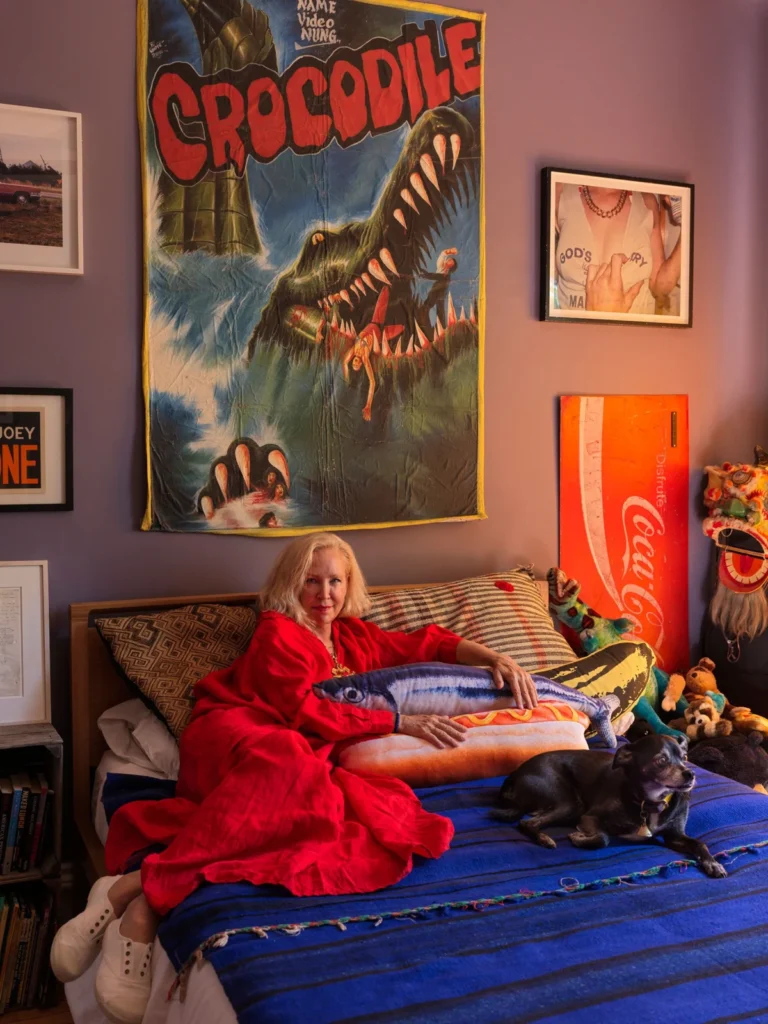
The interior design of the residence defies standard "form follows function" principles. Instead, the home functions as a living archive of the owner’s life and artistic influences. The integration of high-art pieces—such as works by Brice Marden and Fernand Léger—alongside "unnatural oddities" and kitsch, creates a dialogue between the high-brow and the mundane.

This juxtaposition is not merely decorative; it represents a specific philosophical approach to living. By placing a custom-modified Eames chair alongside a foam-core cutout of David Bowie, or a Chinese console table beneath a pastel drawing by Finbar Craig-Martin, the home challenges the traditional boundaries of domestic space. The inclusion of a red, vintage-inspired kitchen aesthetic serves to ground the house in a tactile, functional reality, providing a necessary contrast to the ethereal, artistic displays found in the living areas.

Institutional and Cultural Perspectives
Observers of the local art and design scene have noted that the restoration of such homes serves a dual purpose: it preserves the physical history of Hudson while simultaneously attracting a new class of cultural investors. By eschewing the "white cube" aesthetic often favored by modern collectors, the residence demonstrates that historical architecture is capable of absorbing unconventional, maximalist design choices.

Local historians have long argued that the preservation of such structures is essential to maintaining the "eccentric" character that defines Hudson. When individuals with deep ties to the art world choose to occupy and curate these spaces, they act as unofficial curators of the city’s built environment. The presence of artifacts ranging from Indonesian stools to Stone Age tools suggests that the house has become a repository for global narratives, effectively rooting a piece of Victorian history in a contemporary, globalized context.

Future Outlook and Final Analysis
As the property enters its next phase of life, it stands as a testament to the idea that luxury is not merely the absence of need, but the presence of meaning. The "Norma Desmond" staircase, which serves as a central focal point of the home, is more than a design element; it is a nod to the theatricality of living in a space that demands attention.

The implications of this residential model are significant. For homeowners, the lesson is clear: the value of a property is found in its ability to adapt to the life of its occupant. For the city of Hudson, the continued occupation and thoughtful, albeit eccentric, restoration of homes like the one on Willard Place ensures that the city’s architectural identity remains vibrant.

The upcoming release of Jessica Craig-Martin’s memoir, I Regret I Am Able to Attend, promises to offer further insight into this life among artists and the specific, idiosyncratic choices that define the home. The title itself—a play on the formal language of social rejection—suggests that the author’s relationship with her environment is one of deliberate choice and carefully curated isolation. In an era where homes are increasingly viewed as assets to be flipped or sterilized for maximum resale value, the Willard Place residence stands as a defiant, albeit graceful, alternative: a house that has been allowed to develop a personality, fueled by the "madness" of its owner and the enduring, rigid grace of its own Victorian bones.

The success of this project confirms that the most compelling residential outcomes occur when the homeowner stops treating the building as a project and begins treating it as a partner. It is a one-way trip into a lifestyle where the past and present are not separated by renovations, but are instead layered, one upon the other, to create a singular, immersive experience.