
The intersection of music, politics, and corporate venue management has once again sparked intense global debate following the high-profile removal of American rapper Macklemore from Ed Sheeran’s North American stadium tour. The controversy, which unfolded across several major metropolitan venues in late 2025, has drawn commentary from some of rock music’s most enduring figures. Members of the legendary Irish rock band U2 have stepped forward to address the unfolding fallout, defending Macklemore’s foundational right to political speech while simultaneously urging the public and media not to unfairly vilify Ed Sheeran, who found himself caught in the middle of a complex contractual and ideological crossfire.
The dispute highlights the increasingly volatile climate surrounding celebrity activism, geopolitical commentary, and the corporate parameters governing major live entertainment spaces. As artists navigate the pressures of global touring alongside their personal convictions, industry stakeholders are forced to reexamine the boundaries of censorship, promoter liability, and freedom of expression.
Chronology of the Controversy
The sequence of events leading to Macklemore’s dismissal from the Loop Tour began in earnest during September 2025. Macklemore, known for his vocal political stances and active community engagement, was serving as a supporting act for Ed Sheeran’s sprawling North American stadium tour.
The turning point occurred during two consecutive performances at MetLife Stadium in East Rutherford, New Jersey. Taking the stage in front of tens of thousands of concertgoers, Macklemore used his platform to voice strong political opinions regarding the Middle East. He explicitly shouted "Free Palestine," addressed the ongoing humanitarian crises in Gaza and the West Bank, and performed his controversial protest song, "Hind’s Hall," a track dedicated to student activism and solidarity with Palestinian civilians.
While the live audience reaction was mixed—ranging from vocal support to quiet discomfort—the off-stage ramifications were immediate. The Messina Touring Group, the primary promoter behind Sheeran’s tour, quickly realized that the political messaging was violating the policies of multiple host venues. Promoters were informed by stadium executives that future dates on the itinerary would be canceled if Macklemore remained on the billing.
The situation escalated when New England Patriots owner Robert Kraft publicly confirmed that he had barred the rapper from performing at Gillette Stadium in Foxborough, Massachusetts. Kraft cited not only the specific statements made at MetLife Stadium but also pointed to what he characterized as a broader historical pattern of antisemitic rhetoric and imagery associated with the artist—an accusation that Macklemore’s representatives and supporters have consistently denied.
Faced with mounting pressure from venue owners and promoters, the decision was ultimately made to drop Macklemore from the remaining dates of the North American leg. The fallout sent shockwaves through the touring camp, prompting several supporting acts—including singer-songwriter Finneas, folk artist Lukas Graham, and traditional Irish folk band Beoga—to voluntarily withdraw from the tour in solidarity with Macklemore. Ed Sheeran later addressed the turmoil during a concert in Philadelphia, publicly apologizing for mistakes made in handling the logistical and diplomatic complexities of the situation and clarifying that the final decision to remove the rapper ultimately rested with the tour promoters rather than himself.
U2 Weighs In: The Edge and Larry Mullen Jr. Speak Out
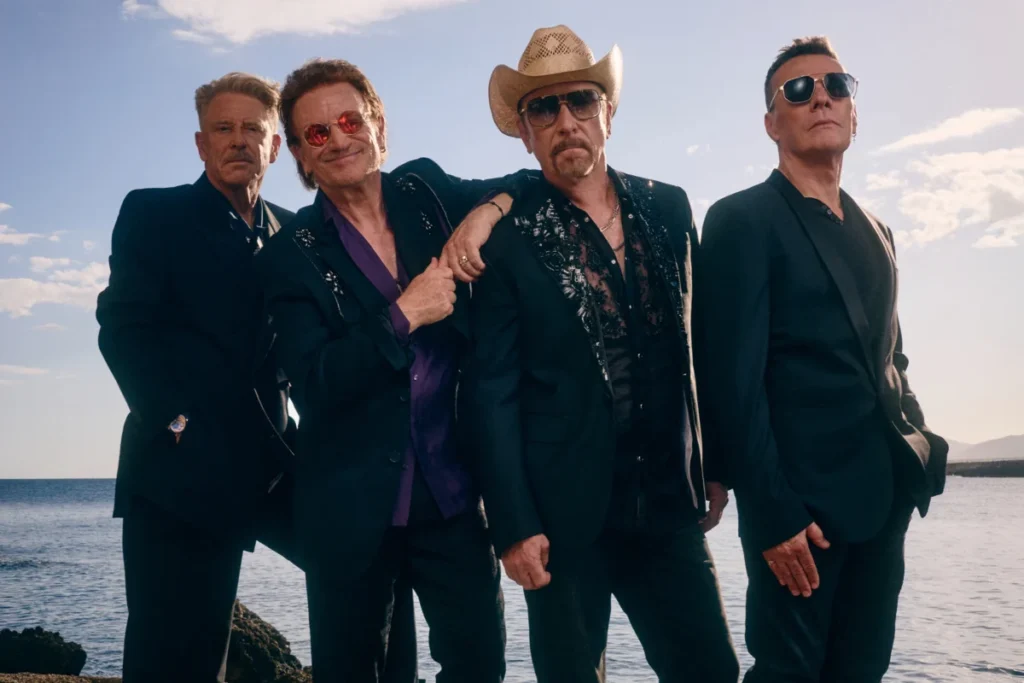
As the music industry grappled with the implications of the tour cancellation, U2’s guitarist The Edge and drummer Larry Mullen Jr. offered their perspectives during a promotional tour for their upcoming 16th studio album, Carnaval De Luz.
Speaking in an interview with BBC News, The Edge emphasized the necessity of protecting artistic autonomy while defending Sheeran against disproportionate blame. "We totally support Macklemore’s right as an artist to say what he wanted to say," The Edge stated. "I don’t think Ed should be vilified," he added, acknowledging the nearly impossible position in which the British pop star was placed as the headliner of a massive commercial enterprise. The guitarist also expressed respect for the supporting musicians who chose to leave the tour on principle, categorizing the dispute as a fundamental test of free expression within the modern entertainment industry.
Larry Mullen Jr. took a more militant stance regarding the broader implications of corporate censorship. "Artists can choose whether they want to be politically active or not. It’s a human right," Mullen declared. "Pero we as a band will fight for the right to speak your mind as long as it doesn’t incite violence. And even if we disagree with it or don’t like it, nobody has a right—no billionaire, no promoter, no owner has the right to censor anybody. They will definitely not be censoring us ever."
Macklemore’s Response and Benefit Concert Series
Rather than retreating from the public eye following his dismissal from the Loop Tour, Macklemore redirected his creative and political energies into independent programming. In the weeks following the controversy, the rapper organized and headlined a series of sold-out benefit concerts under the banner of "Free Palestine" in major European cultural capitals, including Dublin, Ireland; Paris, France; and London, England.
These events featured collaborative guest appearances from high-profile artists who shared his sentiment, including Irish singer-songwriter Hozier, politically charged rap trio Kneecap, and traditional folk group Beoga. Proceeds from the ticket sales and associated merchandise were channeled directly into international humanitarian organizations dedicated to providing aid and support to Palestinians affected by the conflict in Gaza and the West Bank. Analysts note that these independent ventures allowed Macklemore to bypass traditional corporate tour structures entirely, transforming a career setback into an aligned grassroots movement.
Broader Implications for Live Entertainment and Corporate Sponsorship
The clash between Macklemore, venue owners, and promoters underscores a growing structural tension within the live music industry. As stadiums and arenas are increasingly owned or operated by corporate conglomerates, sports franchise owners, and private investment groups, the criteria for booking commercial entertainment have expanded beyond mere ticket-selling power and musical genre compatibility.
Industry observers point out that venue operators are becoming increasingly risk-averse in an era of heightened political polarization. Major stadiums host diverse events ranging from NFL games to corporate conventions, making management teams highly sensitive to any rhetoric that could alienate major sponsors, season-ticket holders, or municipal partners. Consequently, clauses regarding "conduct detrimental" or "disruptive political speech" are receiving stricter enforcement.
Conversely, civil liberties advocates and musician unions argue that outsourcing content moderation to private stadium owners creates a dangerous slippery slope for free speech. When a handful of billionaires or corporate entities can unilaterally blacklist performers for expressing political viewpoints, the diversity of public discourse within mainstream cultural spaces is severely restricted.
The intervention by veteran stadium acts like U2—who have decades of experience navigating political controversy, human rights advocacy, and massive commercial tours—brings renewed attention to these structural inequities. While U2’s members cautioned against scapegoating individual artists like Ed Sheeran, their uncompromising defense of unvarnished artistic expression signals that tensions between commercial viability and political speech will remain a defining challenge for the global touring industry for the foreseeable future.