
The stark reality of South Korea’s entertainment industry has once again captured public attention following startling revelations made by prominent comedians regarding the strict, military-style hierarchical culture that historically dominated the South Korean comedy scene. During recent broadcasts and digital media appearances, several well-known television personalities detailed instances of severe psychological pressure, rigid dress codes, exclusion, and physical violence perpetrated by senior artists against their juniors. These disclosures have reignited a broader national conversation concerning workplace harassment, power dynamics, and the institutional reforms necessary within South Korean broadcasting organizations.
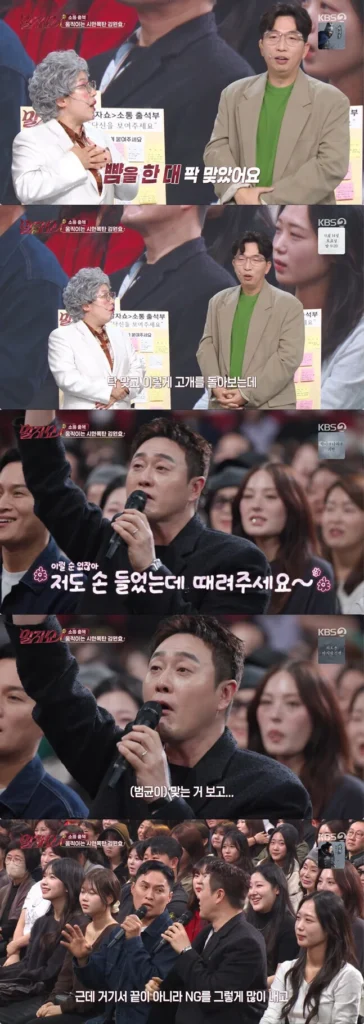
The latest wave of disclosures materialized during an episode of KBS2’s program Malja Show, broadcast on November 2. The episode featured comedians Song Joon Geun, Kim Won Hyo, and Jung Beom Kyun, who gathered to discuss the intricate unwritten rules and stringent behavioral expectations that governed the comedy departments of major broadcasting networks during their rise to prominence.
Rigid Hierarchies and Strict Regulations on Daily Life
According to the panel, the culture within the comedy troupes of South Korea’s major public broadcasting stations—most notably KBS, SBS, and MBC—mirrored the strict regimentation of the military. Song Joon Geun explained to the audience that junior comedians were subjected to comprehensive regulations that extended far beyond professional performance, dictating even trivial aspects of daily life such as personal attire, greeting etiquette, and off-stage behavior.
The discussion escalated when Jung Beom Kyun recounted a specific disciplinary incident from his early career. He described an environment where making a mistake, referred to in the industry as a "no good" or NG take during rehearsals or recordings, was treated as a severe infraction rather than a natural part of the creative process.
Jung recalled a day when both he and fellow comedian Kim Won Hyo committed an error during a project. A senior comedian gathered the junior staff and demanded accountability, asking, "Who made the NG? Raise your hand." Believing it was his professional duty to take responsibility, Jung raised his hand, whereupon he was immediately struck across the face.
The Dynamics of Fear and Self-Preservation
Adding dark comedic irony to a distressing memory, Jung described the split-second reaction of Kim Won Hyo, who had been standing right beside him. As Jung absorbed the physical blow and turned his head, he noticed Kim in the middle of lowering his own hand, having narrowly avoided sharing the same fate.
Kim Won Hyo offered his perspective on the incident, explaining the complex calculus of self-preservation that governed such high-tension environments. He argued that volunteering for punishment in an unpredictable disciplinary setting was rarely rewarded with leniency. Kim explained that the atmosphere at the moment was thick with anxiety and hesitation as he debated whether to step forward. When Jung impulsively declared, "It’s me!" and raised his hand, the senior reacted instantly. Kim admitted that human instinct ultimately took over, noting that seeing his colleague absorb the physical blow led him to quietly withdraw his hand to avoid compounding the situation.

A Pattern of Systemic Abuse Across Digital and Broadcast Media
While the disclosures on Malja Show brought renewed visibility to the issue, they represent only a fraction of similar accounts that have surfaced in recent months. The entertainment community has seen an increasing willingness among veteran performers to break the silence surrounding historical abuses within the once-impenetrable fraternity of South Korean gag troupes.
On October 25, a parallel discussion unfolded on the YouTube channel Gag Women. Comedians Jung Kyung Mi, Kim Kyung Ah, Oh Na Mi, and Jo Seung Hee shared harrowing accounts of social ostracization during their formative years in the industry. The female artists revealed that juniors were routinely excluded from dining with senior colleagues, forcing them to survive on leftover food or resort to eating secretly in public restrooms to avoid breaching strict protocol regarding social stratification.
Earlier in July, comedian Jung Cheol Gyu came forward with detailed allegations of physical assault committed by a senior colleague during his active television career. Jung recounted an incident where a senior summoned him away from a script meeting with a staff writer, led him to a vehicle, and initiated an unprovoked physical assault. According to Jung, the assailant struck him repeatedly across the face while questioning his rumored appearance fees, demanding to know the source of reports regarding a 30 million KRW (approximately $22,300 USD) salary milestone. When Jung turned his head in reaction to the blows, the assailant escalated the violence, demanding to know why he was looking away before striking the other side of his face.
Historical Context of Broadcasting Station Troupes
To understand the persistence of this culture, industry analysts point to the unique recruitment and training system that dominated South Korean television for decades. Major networks maintained exclusive, open-recruitment comedy cohorts. Aspiring comedians competed fiercely for official network-affiliated status, entering a rigid meritocracy where career survival depended entirely on the approval of network producers and senior comedians who held immense influence over casting decisions.
Within these closed ecosystems, senior artists functioned as de facto commanders of their respective troupes, enforcing discipline under the justification of maintaining quality control, stage etiquette, and institutional respect. Because network executives often turned a blind eye to internal hazing—viewing it as an effective method for maintaining order among large groups of ambitious performers—victims had virtually no internal recourse or HR mechanisms to report physical assault or psychological abuse.
Industry Implications and Public Response
The steady emergence of these testimonials has triggered widespread public criticism across South Korean media forums and social platforms. Viewers and cultural critics have drawn parallels between the hazing culture in the entertainment sector and historical scandals in South Korean sports and military institutions, where entrenched hierarchies similarly enabled physical and psychological abuse.
Legal experts note that while many of these alleged incidents occurred years or even decades ago—potentially testing statutory limitations for criminal prosecution—the reputational fallout for the perpetrators and the networks that enabled them is substantial. Modern audiences, increasingly intolerant of workplace bullying and abuse of power, have demanded greater accountability from broadcasting stations that once fostered or ignored these toxic environments.
As digital platforms continue to democratize access to media, enabling performers to bypass traditional gatekeepers and share unedited histories, the historical mythos of the South Korean comedy troupe is undergoing a profound and critical re-evaluation. The disclosures on Malja Show and other channels serve as a stark reminder of the hidden personal costs borne by artists within highly regimented creative industries, underscoring the ongoing necessity for modern workplace protections across the global entertainment sector.