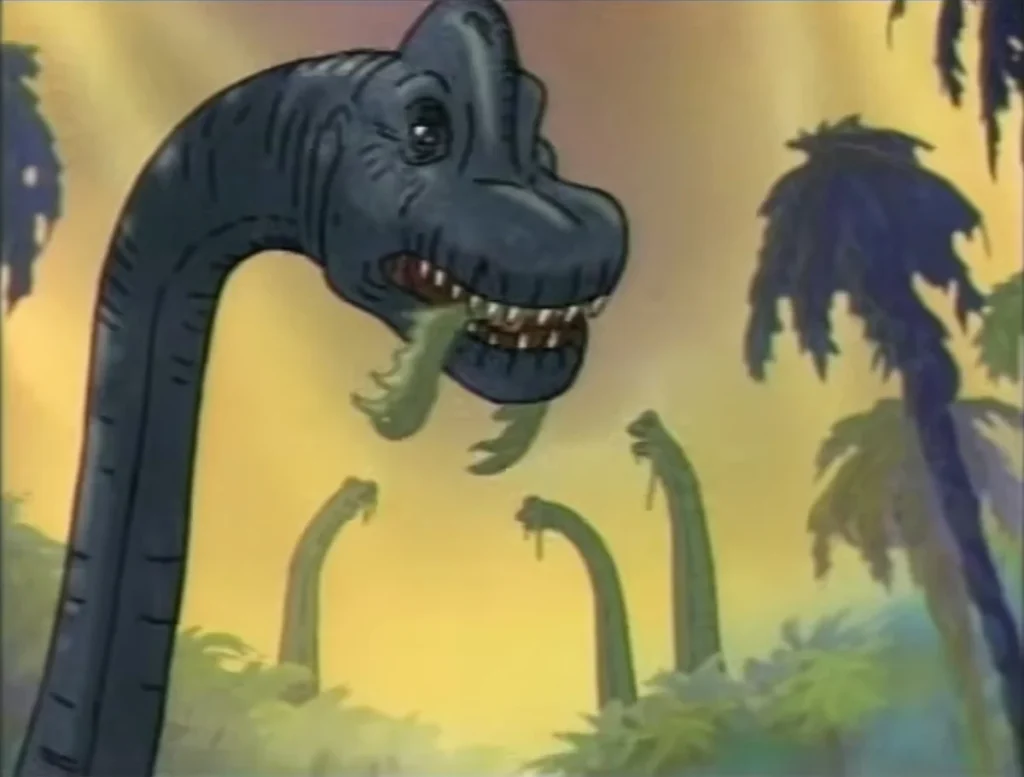

The landscape of 1990s television and cinema was defined by cross-media experimentation, where blockbuster films routinely spawned animated television adaptations aimed at capitalizing on youthful demographics. Yet, following the unprecedented, runaway box-office success of Steven Spielberg’s 1993 cinematic masterpiece Jurassic Park, the multimedia strategy surrounding the franchise took an unexpected turn that has remained hidden in studio archives for over three decades. Recently, a long-lost promotional pitch video for a canceled animated adaptation titled Escape from Jurassic Park has surfaced online, validated by pop-culture historians and dedicated franchise archivists. This rare artifact provides a fascinating glimpse into an ambitious television project that aimed to bridge the gap between adult-oriented blockbuster thrills and traditional 1990s cel animation, only to be shelved before a single full-length episode could enter formal production.
Main Facts of the Discovery
The resurfaced material, initially brought to wider attention via archival preservationists on social media and meticulously verified by the dedicated Jurassic franchise fan site Jurassic Outpost, consists of a roughly one-minute promotional trailer. Produced by Universal Cartoon Studios in the wake of the original film’s theatrical dominance, the project was conceptualized not as a sanitized cartoon tailored strictly for young children—a common fate for film-to-television adaptations of the era—but rather as a mature sci-fi action series intended to mirror the tone, tension, and demographic appeal of Spielberg’s live-action blockbuster.
The unearthed footage features classic characters, iconic dinosaurs, and distinct environmental hazards set on Isla Nublar, rendered in a bold, dynamic art style indicative of early-1990s prestige animation. According to authenticated production documents, the series had progressed far enough in the conceptual phase that an entire first season comprising 23 episodes was fully outlined, and cutting-edge visual technologies of the time were tested to bring the prehistoric beasts to life on a television budget. However, creative friction, administrative oversights, and shifting studio priorities ultimately led to the cancellation of Escape from Jurassic Park, leaving the pitch trailer as the sole surviving evidence of its existence.

Chronology and Development History
The genesis of Escape from Jurassic Park can be traced directly to the summer of 1993, a cultural watershed moment when Michael Crichton’s techno-thriller premise, elevated by Spielberg’s visionary direction and Industrial Light & Magic’s revolutionary computer-generated imagery, captured the global imagination. Universal Pictures, eager to expand the intellectual property across all available mediums, authorized Universal Cartoon Studios to develop a television spin-off.
To spearhead the artistic and narrative direction of the project, the studio enlisted seasoned industry professionals. The production was overseen by Will Meugniot, a veteran animator and producer whose credits included critically acclaimed projects such as The Real Ghostbusters and Captain Planet and the Planeteers. Meanwhile, the distinct visual identity, character designs, and atmospheric world-building of the proposed series were crafted by renowned comic book artist and illustrator William Stout, famous for his paleo-art and contributions to fantasy and sci-fi cinema.
During this development window, which spanned late 1993 and early 1994, the creative team established a comprehensive framework for the series. Beyond outlining the 23-episode inaugural season, production partners collaborated with MetroLight, a pioneering digital animation studio of the era, to integrate groundbreaking CGI elements into the traditional 24-frame-per-second cel animation. The resulting one-minute pitch film was assembled to demonstrate how the medium could successfully replicate the scale and danger of Isla Nublar on a weekly television schedule. Despite this significant investment of creative labor, the series failed to transition from the pitch phase into active production, abruptly halting any further animation work and consigning the completed promotional reel to corporate obscurity for thirty-three years.
Supporting Data and Creative Vision

An examination of the leaked production materials reveals a distinct divergence from contemporaneous animated series. While shows like Fox’s contemporary adaptations or syndicated morning-cartoon fare relied on bright, simplified aesthetics and educational or moral framing, Escape from Jurassic Park leaned into a gritty, action-adventure aesthetic.
William Stout’s conceptual artwork and the completed character models show a faithful adaptation of the film’s human cast—including Alan Grant, Ellie Sattler, Ian Malcolm, and John Hammond—alongside anatomically ambitious interpretations of dinosaurs. The integration attempted by MetroLight aimed to blend hand-drawn characters with computer-generated dinosaurs, a technique that mirrored the landmark hybrid methodology utilized by ILM in the live-action feature film.
Furthermore, the narrative scope outlined for the 23-episode arc was designed to expand the mythology of the park beyond the confines of the original film’s narrative structure, exploring survivalist themes, corporate espionage, and ecological disaster in greater depth than what standard children’s television permitted at the time.
Official Responses and Behind-the-Scenes Friction
The exact catalyst for the abrupt cancellation of Escape from Jurassic Park has long been a subject of speculation among entertainment historians, but verified accounts from key personnel shed light on the administrative breakdown that sealed the project’s fate.

The primary obstacle appears to have stemmed from the upper echelons of Amblin Entertainment and director Steven Spielberg himself. According to retrospective accounts provided by William Stout, Spielberg was experiencing profound creative exhaustion following the grueling post-production and worldwide rollout of the original film. The director was reportedly "so burnt out on Jurassic" that he possessed zero appetite for overseeing or engaging with an expanded television universe immediately following the film’s theatrical run.
Other industry insiders and production historians have suggested an even more direct point of friction: institutional protocol. Rumors and internal accounts indicate that Universal Cartoon Studios commissioned and greenlit the development of the animated series autonomously, proceeding without securing explicit prior approval or input from Spielberg. Upon discovering that an animated adaptation had been initiated behind his back, Spielberg was reportedly displeased, viewing the unauthorized expansion as a premature dilution of the brand. Consequently, he allegedly refused to review the pitch materials or authorize the continuation of the series, effectively utilizing his considerable creative clout to veto the project before a single script could be recorded or animated.
Broader Impact and Industry Implications
The rediscovery of the Escape from Jurassic Park pitch trailer offers more than mere nostalgic curiosity; it serves as a valuable case study in the evolution of franchise management during the crucial transitional period of 1990s Hollywood. In an era before cinematic universes became the standardized baseline for major intellectual properties, studios frequently experimented with disparate media channels—ranging from comic books and video games to Saturday morning cartoons—often operating with decentralized oversight.
The failure of the project underscores the immense influence wielded by auteur directors in the 1990s, where a single creator’s fatigue or dissatisfaction could instantly terminate a multi-million-dollar corporate enterprise. Had Spielberg embraced the project, the cultural footprint of the Jurassic franchise might have pivoted toward television much earlier, altering the trajectory of animated adaptations for decades to come.

Instead, the Jurassic Park franchise remained strictly within the cinematic realm for nearly three decades before eventually branching out into television via modern streaming platforms with series such as Jurassic World: Camp Cretaceous and Jurassic World: Chaos Theory. These contemporary iterations, however, occupy a very different aesthetic and demographic space, tailored for modern streaming consumption and digital-first animation pipelines.
The surfacing of the 1993 pitch trailer bridges a missing link in pop-culture history, reminding contemporary audiences of a road not traveled. While the full scope of Escape from Jurassic Park will now only ever exist in outlines, concept art, and this singular, newly unearthed promotional clip, its brief emergence from the archives provides a poignant window into the ambitions of 1990s animation and the high-stakes politics of blockbuster filmmaking.