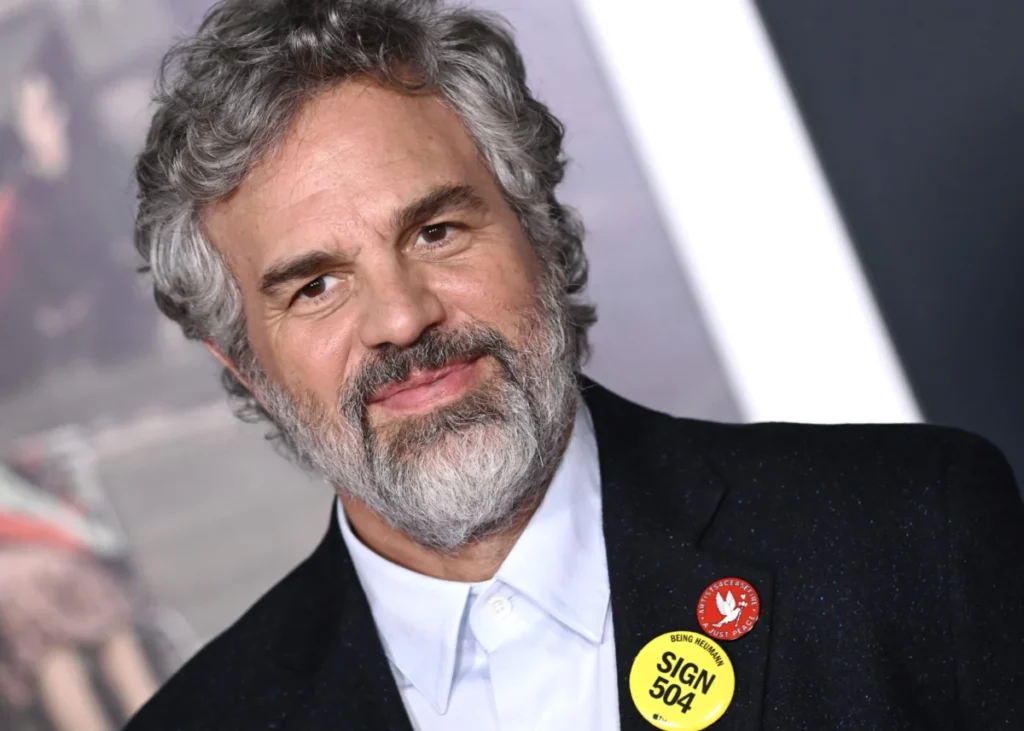

Mark Ruffalo’s career trajectory is nothing short of meteoric. With a staggering five major projects released in 2026 alone, the Marvel Cinematic Universe star and multi-time Oscar nominee finds himself in the rare position of being one of the most in-demand performers in Hollywood. Yet, beneath the high-octane glare of film sets and red-carpet premieres lies a man deeply invested in the concept of "home." For decades, Ruffalo—alongside his wife, Sunrise Coigney—has carefully curated a residential footprint that balances the demands of an A-list career with a profound desire for stability, sustainability, and connection to the land. From the rolling hills of the Catskills to the sophisticated brownstones of Manhattan, his property history reflects a life defined by the tension between professional ambition and a grounded, family-first philosophy.
The Catskills Sanctuary: A Shift Toward Simplicity
The foundation of the Ruffalo family’s residential life was laid in the mid-1990s, far from the soundstages of Burbank. In a move that underscored his preference for quietude, a then 28-year-old Ruffalo invested $63,000 in a 27-acre plot of land in Callicoon, a small, secluded town in New York’s Catskill region. At the time, this was a significant commitment for a rising actor, signaling a long-term interest in agrarian life that would eventually define his personal brand.
By 2001, following his marriage to Coigney, the couple upgraded their holdings to a former dairy farm. The property, anchored by a 19th-century post-and-beam barn, served as a crucial retreat from the chaotic pace of Los Angeles. Ruffalo has frequently cited this move as one of the most pivotal decisions of his life. The transition was not merely cosmetic; it was ideological. In 2009, the couple made the definitive decision to sell their Hollywood Hills property and relocate to the Catskills full-time.
This era of the family’s life was marked by a commitment to self-sufficiency. The farm became an outdoor classroom for their three children, fostering an environment that prioritized organic growth and direct contact with the natural world. Ruffalo’s transformation into an amateur horticulturist saw the addition of a comprehensive garden, featuring everything from heirloom tomatoes and asparagus to a developing orchard of Honeycrisp apples and pears. By his own account, the absence of urban noise allowed his children to develop a unique sense of independence, a stark contrast to the hyper-connected, fast-paced nature of modern celebrity upbringing.
Hollywood Years: The $1.7 Million Foothold
Before the full-time move to New York, the Ruffalo-Coigney family maintained a high-profile presence in Los Angeles. In December 2004—a banner year for the actor following his performances in Eternal Sunshine of the Spotless Mind and 13 Going on 30—the family purchased a gated, 3,000-square-foot residence in the Hollywood Hills for approximately $1.7 million.
The home, constructed in 1933, was designed in the style of a Connecticut farmhouse, offering a rare aesthetic warmth in the L.A. market. It featured three bedrooms, four bathrooms, and a detached guesthouse that provided flexibility for visiting family or creative work. The transaction is notable not just for the property itself, but for its role in the subsequent real estate market; after the family vacated in 2009, the home was purchased by Zooey Deschanel and Ben Gibbard. This specific transfer of property highlights the tight-knit nature of the Hollywood real estate circle during the mid-2000s, where properties often cycled through the hands of creative professionals seeking a mix of historical charm and modern privacy.

The Urban Pivot: Brooklyn and the Return to Manhattan
As the couple’s children entered their formal schooling years, the practicalities of a rural lifestyle necessitated a return to metropolitan centers. In 2015, the family purchased a historic townhouse in Brooklyn’s Carroll Gardens for $3.5 million. This 1899-built residence represented a significant shift in lifestyle, trading the wide-open pastures of the Catskills for the intricate, dense architectural heritage of New York City. The townhouse was a masterclass in period detail, featuring cathedral ceilings, original marble fireplaces, and a classic curved wooden staircase.
However, the Brooklyn experiment was relatively short-lived. By 2017, the family sold the property for $3.2 million. While the sale resulted in a modest financial loss, the move was part of a larger, strategic relocation to Manhattan. The transition reflected a broader trend among high-net-worth families in the city who prioritize proximity to private institutions and the specific cultural infrastructure of the Upper West Side.
Community Engagement and the Upper West Side Legacy
Ruffalo’s current residence in Manhattan is an early 20th-century four-story townhouse. While the actor keeps the specific details of his private life guarded, his presence in the Upper West Side has become highly visible through his civic engagement. Since 2023, he has become a leading voice in the campaign to preserve the West Park Presbyterian Church, a historic neighborhood landmark threatened by redevelopment.
His activism in this area transcends celebrity advocacy; it is deeply rooted in his personal identity as a neighborhood resident. During a rally in December 2025, Ruffalo explicitly confirmed his proximity to the church, noting that he lives just a block away. This alignment between his private life and his public advocacy suggests a desire to be seen not as a transient superstar, but as a long-term stakeholder in the community’s architectural and social health.
Fact-Based Analysis: The Implications of a "Nomadic" Lifestyle
The evolution of Ruffalo’s real estate portfolio suggests a deliberate attempt to reconcile the itinerant nature of the film industry with the human need for geographic continuity. For most actors, the "nomadic" lifestyle is a byproduct of production schedules. For Ruffalo, the pattern of property acquisition reveals a three-pronged strategy:
- Investment in Heritage: Whether it is the 19th-century barn in the Catskills or the early 20th-century townhouse in Manhattan, Ruffalo shows a consistent preference for structures with historical provenance rather than modern, glass-and-steel developments.
- Sustainability as a Core Value: His focus on gardening, woodworking, and the preservation of historic landmarks indicates that his real estate choices are motivated by a desire for a smaller carbon footprint and the protection of neighborhood character.
- The "Home Base" Dynamic: Despite his busy 2026 schedule, the consistent maintenance of the Catskills estate as a secondary residence proves that he views property as a hedge against the exhaustion of professional life. It is not merely a financial asset, but a psychological anchor.
A Chronology of Residence
- 1990s: Ruffalo begins his relationship with the Catskills, purchasing his first acreage for $63,000.
- 2000: Marriage to Sunrise Coigney.
- 2001: Expansion to a larger dairy farm estate in the Catskills.
- 2004: Purchase of a $1.7 million Hollywood Hills home.
- 2009: Sale of the Los Angeles property; full-time relocation to the Catskills.
- 2015: Purchase of a $3.5 million Carroll Gardens townhouse in Brooklyn.
- 2017: Sale of the Brooklyn property and transition to the Upper West Side.
- 2023–Present: Active participation in the preservation of the West Park Presbyterian Church.
Broader Impact and Industry Context
The scrutiny of celebrity real estate often centers on wealth accumulation or aesthetic choices. However, in the case of Mark Ruffalo, the narrative is one of adaptation. As the film industry continues to shift toward globalized production, the challenge of maintaining a stable domestic life becomes increasingly difficult. By maintaining a home that is both a repository for his family’s memories and a site of his own civic contribution, Ruffalo manages to retain a sense of normalcy that is often stripped away by the demands of a high-profile career.
Furthermore, his vocal support for historic preservation in New York signals a growing trend of "celebrity localism," where high-profile figures leverage their influence to protect the physical identity of their chosen neighborhoods. This is a far cry from the gated, insular living typical of the Hollywood elite. As he enters the next phase of his career, it is likely that his residential choices will continue to favor projects that offer both architectural integrity and community integration, reinforcing his status as an actor who, despite his fame, remains profoundly connected to the world outside the frame.